Parents of Sec 1–4 students in Serangoon Gardens, Kovan, Hougang & nearby
Sit your child down with me for one session. I'll show you precisely which foundation cracked, when, and what to fix first, in a written report you keep, whether or not you ever book a lesson.
45 minutes · in person · no cost · no obligation · no pitch at the end
There's a specific sentence I hear from almost every student before we start.
Not "this is hard." Not "I don't get it."
"I don't know how to do."
It comes out before the pencil has even moved. And it tells me something a report card never will. I'll come back to that, because it's the whole reason this diagnostic exists.
The report says "careless mistakes" again. You tell him to slow down and check his work. He says he'll try. Nothing changes.
He says he understands in class. He probably does. But the homework comes back wrong anyway, and when you ask him to explain it, he can't.
Maybe you've already tried a centre with twenty kids in a room, going through answers on a whiteboard. Maybe a tutor who was nice enough but didn't change anything. Either way it's been months, and you're back where you started with less time.
And here's the part that actually keeps you up: the gap isn't being fixed, it's growing. Every new topic is built on the broken one, so the crack widens every term. By the time O-Levels arrive it isn't one weak topic anymore. It's everything downstream of it.
Meanwhile at home you've become the villain. Checking, nagging, arguing about homework. You hate it. He hates it. And you're not even sure it's helping.
When a student keeps making "careless" mistakes, here's what's usually happening: something from Sec 1 or Sec 2 never properly landed. Fractions. Negative signs. Indices. Something small.
He didn't stop there. He found a way to work around it: a shortcut, a memorised pattern, a way of getting to the answer that mostly holds. And it does mostly hold, for a while. Until the questions get complex enough that the workaround collapses.
From outside, that looks like carelessness. From inside his working, it's obvious.
That's what a diagnostic is for. Not to test him, but to watch how he thinks and find the exact point where it breaks. You can't fix what you haven't located, and no amount of extra practice papers will fix the wrong thing.
That sentence, "I don't know how to do", is the tell. It means he's stopped believing there's any foothold at all. But nobody starts from zero. There is always something he already knows that we can build from. Finding it is the first thing we do.
The tutor
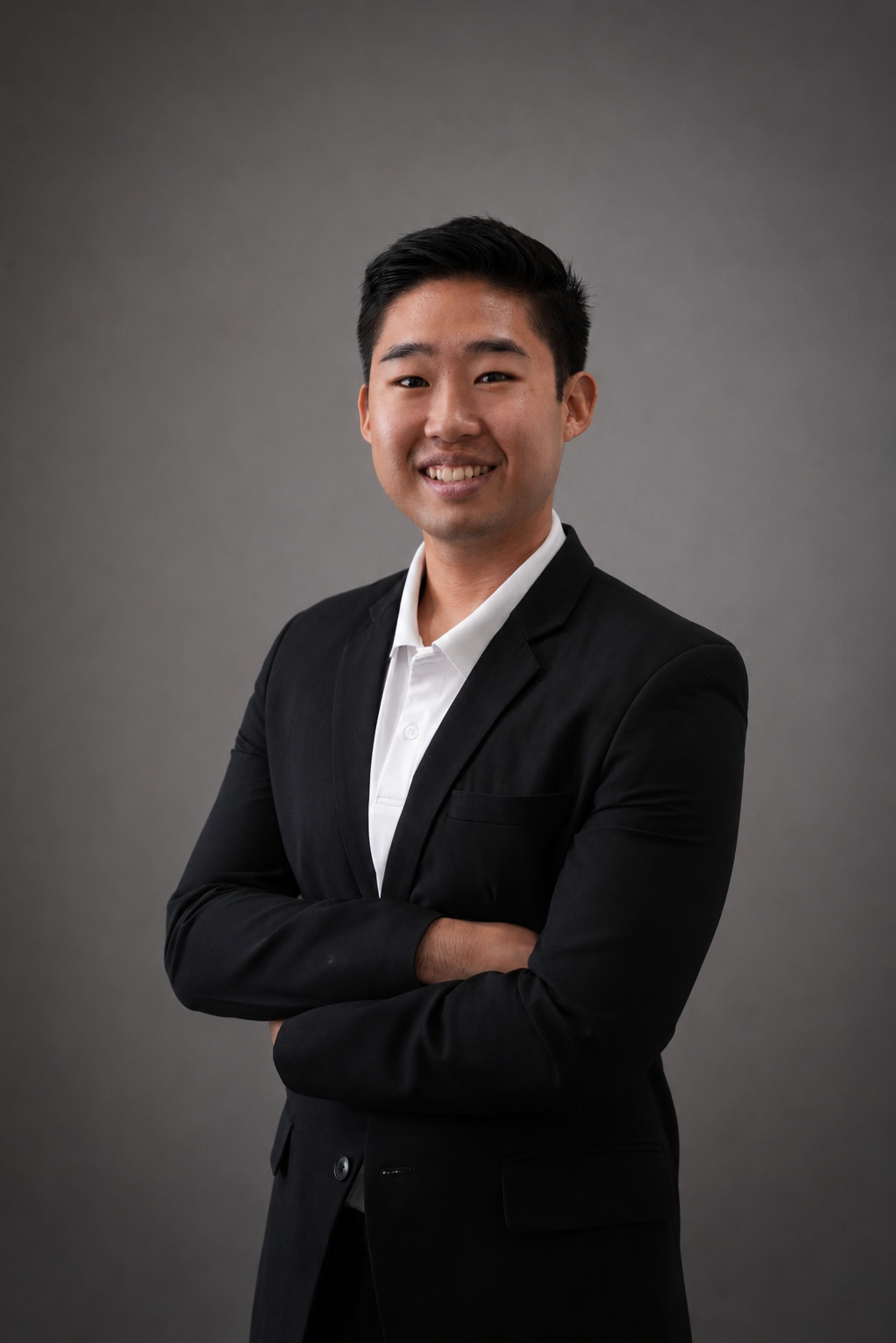
I'm Maier. I bombed my Sec 4 prelims, badly enough that I cried, hugged my mum, and apologised for letting her down.
She told me not to be sorry to her, but to be sorry to myself, as I was doing this for me.
So I stopped studying harder and started studying differently. Most of my time went to what I was bad at, not comfortably redoing what I already knew. I stopped burning midnight oil and slept early instead. By O-Levels I'd turned it around.
I did that mostly alone. Nobody diagnosed me. Nobody showed me what was actually broken, so I had to work it out myself, and it cost me time I didn't have.
That's why I teach. I'm trying to be the tutor I didn't have. Three years, around 30 students, and I built The Precision Lab myself.
I'm not the biggest centre in Singapore. I'm not trying to be. Eight students a class is the whole point.
What changes
The blank-page paralysis goes. He knows where to begin.
He learned the concept, not the shape of one problem.
Eight students means I see who's stuck. Nobody nods their way through a term at the back of my room.
Motivation shifts from you to him.
The specific topics, the specific progress. Every month, in writing.
Proof
One student refused to do homework for about six months. His mum asked me to be strict with him. I tried. It failed completely.
So I stopped being an enforcer and became a mentor instead. Joked with him. Kept him motivated. Still taught properly, still held the standard, but the relationship changed first, and the work followed.
He got a B3 for the first time in his life.
Fear gets short-term compliance. It doesn't get you a B3.
Across three years and around 30 students, a 2–4 grade jump is typical.
We are truly grateful for the guidance and support provided by Maier. He is patient, detailed, and always goes the extra mile to ensure my child understands the concepts well. His dedication and genuine care have helped build both confidence and interest in Maths. Most importantly, my child genuinely enjoys his lessons and looks forward to every class. We highly recommend him to any parent looking for a committed and inspiring teacher.
Thank you, Teacher Maier, for all your guidance and patience throughout my son's journey. Not only did you help him achieve his goal of getting into his dream JC, but you also helped him become more confident and mature. We really appreciate how you always encouraged him to ask questions, voice out his concerns, and made every lesson a safe and enjoyable environment for learning. Thank you for believing in him and making learning something he could genuinely enjoy again.
He explains concepts clearly and never gets frustrated, even when I need things repeated. He encourages me to keep trying, which makes me want to do Maths instead of hating it.
Thank you, Teacher Maier, for your dedication and patience in teaching my son Mathematics. Since joining your classes he has made real progress. In Maths, he has picked up efficient shortcut methods that help him solve problems accurately and quickly. We're grateful for your guidance, encouragement, and genuine commitment to his learning. Thank you for making such a positive difference in his academic journey.
The free diagnostic
A 45-minute session, in person, with your child. They attempt questions across their level while I watch how they think. Not a test. Nobody's graded and nobody gets told off.
A written Diagnostic Review. Which topics are solid, which are broken, which one to fix first and why. Specific enough that you could hand it to any tutor and they'd know what to do.
A conversation with you. I walk you through what I found and what I'd do about it.
It costs nothing, and there's no pitch at the end. I'll tell you what I found. If it makes sense to work with me, you'll know. If your child needs something I don't offer, I'll say that too.
You've possibly already spent money on tuition that changed nothing. I'm not asking you to gamble again, so I've taken the things that usually make it a gamble off the table.
You're never locked in. Month to month. Most centres want a full term upfront; I don't.
You'll know how it's going, every month. A written report from me: what improved, what's still shaky, how focused he was in class, how much effort he put in, and what we're doing next. Not a grade at the end of term, but a clear picture every month, while there's still time to change course.
And you've seen my work before you pay a cent. The diagnostic and the written review come first.
Grades take a term to move and I won't pretend otherwise. But you won't be in the dark about whether it's working.
Book the free diagnostic
No payment details, no obligation, no pitch at the end.
P.S. If you only read this far: your child is very likely not careless, and very likely not "bad at maths." Something further back cracked and he's been compensating ever since, the kind of thing that's invisible on a report card and obvious in his working.
I'll find it in 45 minutes, free, and write it up for you whether or not you ever book a lesson. Eight per class, no contract if you do join, and a written report every month so you're never guessing.
The only real cost here is doing nothing, because the gap only gets wider.